
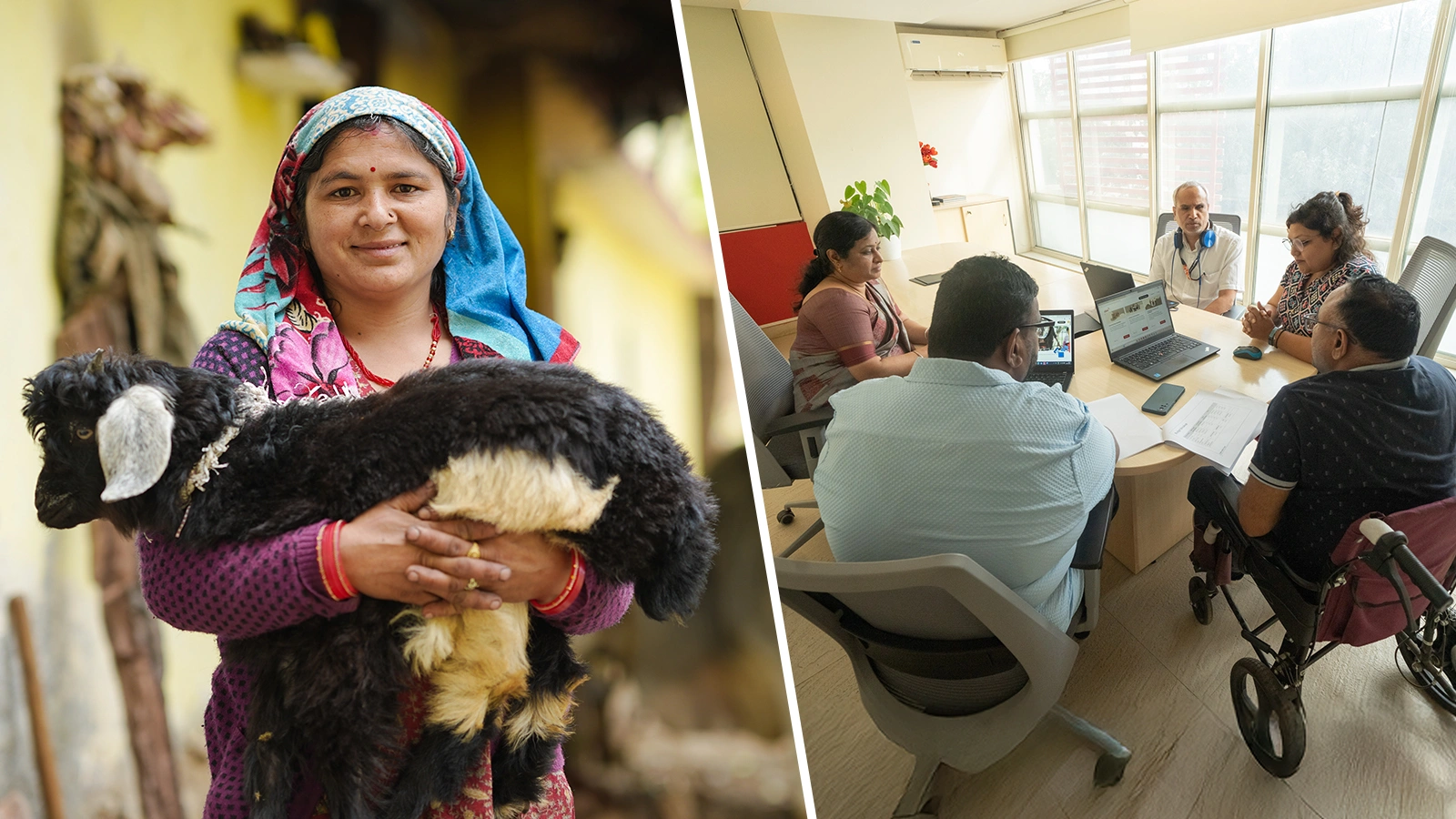
Building Sustainable Livelihoods for All
A person’s career path should be defined by their talent, ambition, and hard work—not by the systemic barriers placed in their way. While many take this straightforward trajectory for granted, persons with disabilities often find themselves navigating a rigid employment landscape that was not built with them in mind. When we talk about sustainable livelihoods, we are looking far beyond a simple paycheck. We are talking about securing long-term economic independence, restoring agency, and ensuring everyone has the fundamental right to contribute their skills to the world.
Creating sustainable livelihoods for persons with disabilities is about more than just filling a vacancy. It is about restructuring our approach to work so that everyone has a fair seat at the table. At CBM India, we believe that disability inclusion begins when we recognize that persons with disabilities are not just beneficiaries, but essential partners in our economy.
Expanding Employment Opportunities
The search for employment opportunities for disabled individuals should never be limited by a lack of accessible infrastructure or outdated company policies. When businesses open their doors to everyone, they gain access to a wider pool of talent, diverse perspectives, and innovative ways of solving problems. By focusing on hiring persons with disabilities, organizations move beyond compliance and tap into the immense potential that exists when people are given the right environment to thrive. It is time we redefine what a productive workplace looks like by centering on human capability.
The Role of Skill Development
Access to quality training is the bridge between aspiration and reality. Comprehensive skill development programs are essential for leveling the playing field.
A prime example of this is the Parivartan Skill Academy in Kolar, Karnataka—a collaborative initiative launched by CBM India Trust and HDFC Bank Parivartan. This structured program, titled ‘Empowerment Through Skills,’ is designed to equip young people from marginalized backgrounds and persons with disabilities with market-relevant skills.
Over a three-year period, the academy is training over 1,100 individuals in sectors like IT, retail, logistics, and essential life skills. Beyond just classroom instruction, the program provides hands-on industry exposure and connects graduates with placement support, resume building, and interview coaching. Crucially, CBM India also works directly with employers to ensure their workplaces are accessible and conducive to inclusive hiring.
Whether it is vocational training, digital literacy, or leadership coaching, disability skill development ensures that individuals have the tools they need to succeed in a rapidly changing job market and achieve long-term economic independence.
Whether it is vocational training, digital literacy, or leadership coaching, disability skill development ensures that individuals have the tools they need to succeed in a rapidly changing job market.
Creating Disability Inclusion in the Workplace
Disability inclusion in the workplace requires a cultural shift and fostering an environment where accommodations are seen as standard practice. When an office is designed to be accessible, and the team culture values diversity, productivity naturally rises. It is about creating a space where people feel comfortable bringing their full selves to work because they know their contributions are respected, and their needs are supported.
Strengthening Livelihood Opportunities
The impact of accessible livelihood opportunities is best demonstrated through concrete results rather than concepts. In the 2024–2025 period alone, CBM India’s initiatives provided targeted skills development training to 3,442 individuals. This training is customized to local economies, offering hands-on expertise in diverse income-generating activities such as farming, animal husbandry, beekeeping, tailoring, and handicraft production.
However, training must be paired with structural support to be truly sustainable. During that same period, CBM India helped 308 people access vital financial services and connected 127 individuals with essential government social protection schemes.
By providing seed funds to establish micro-enterprises and strengthening 142 inclusive community-based organizations, including inclusive Self-Help Groups (iSHGs) and Farmer Producer Organizations (iFPOs). When people are equipped with both the practical skills and the financial capital to start a business or hold a steady position, the cycle of poverty is broken with measurable success.
Partnerships for Economic Growth
Economic empowerment is a collaborative effort. It involves governments, private sectors, and civil society working together to create policy changes that protect the rights of workers with disabilities. When we combine our expertise in disability inclusion with the resources of our corporate partners, we create pathways that were previously blocked. We are not just creating jobs; we are building a more resilient, diverse economy that reflects the reality of the people it serves.
A Future Driven by Potential
The future of work is inclusive. It is a future where the question is no longer “Can this person do the job?” but rather “How can we ensure our workplace supports this person’s talent?” By shifting our focus, we stop wasting human potential and start building a world where every person has the independence they deserve.
Taking the Next Action Together
Building an inclusive world is a collective responsibility. It starts with a conversation in the boardroom, a change in hiring practices, and a commitment to accessible professional development. We invite you to join us in this mission.
Ready to help us create lasting change?
The journey to a world where everyone belongs requires community action and shared resources. You can help us expand these skill-building programs and make inclusion our new normal.