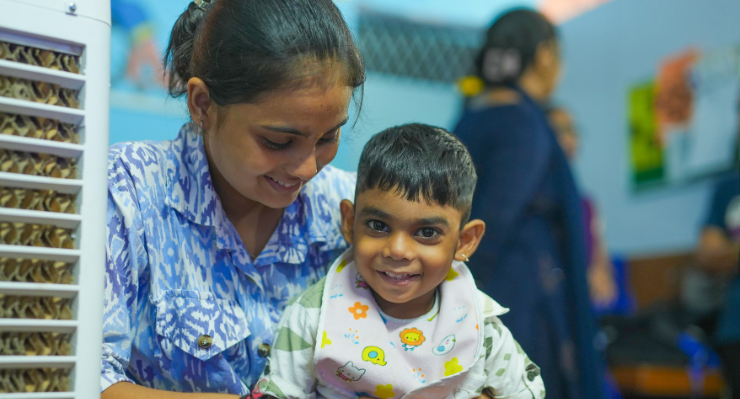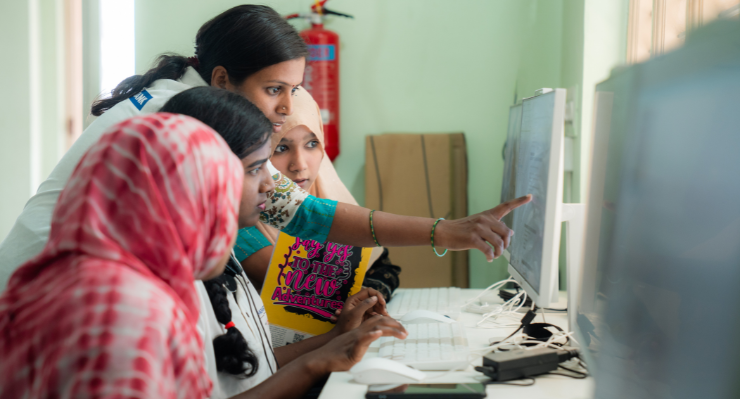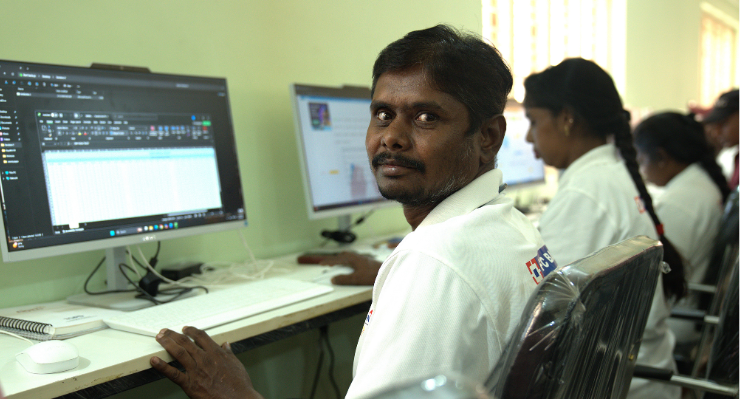
“The children were very inquisitive. They even demonstrated things on their own.“
Just days after we set up a STEM lab at Panchayat Union Middle School in Ayathur, Headmistress Ms. Sathya Priya already has stories to share. The work has only just been completed, but the early sessions have been enough to convince her that something is shifting in her classrooms.
The school, tucked into the interior of Tiruvallur district of Tamil Nadu, serves around 150 students from Lower Kindergarten to Grade 9 and is English medium. The students come from different backgrounds, some from marginalized and low-income households, others more comfortable, and some have disabilities. “It is a mixed group,” Ms. Sathya Priya says. “We follow inclusive learning practices. We do not neglect or sideline anyone.”
Despite its modest setting, the school has built a strong record in inter-school events. “Whenever our students go for competitions, they usually emerge victorious,” she says.
Science, however, has long been a sticking point. The school has no dedicated science teachers, and existing staff take up the subject alongside their other classes. For years, notions stayed locked inside textbooks. “Before the STEM lab was established, children were unable to clearly understand some of the concepts,” Ms. Sathya Priya explains.
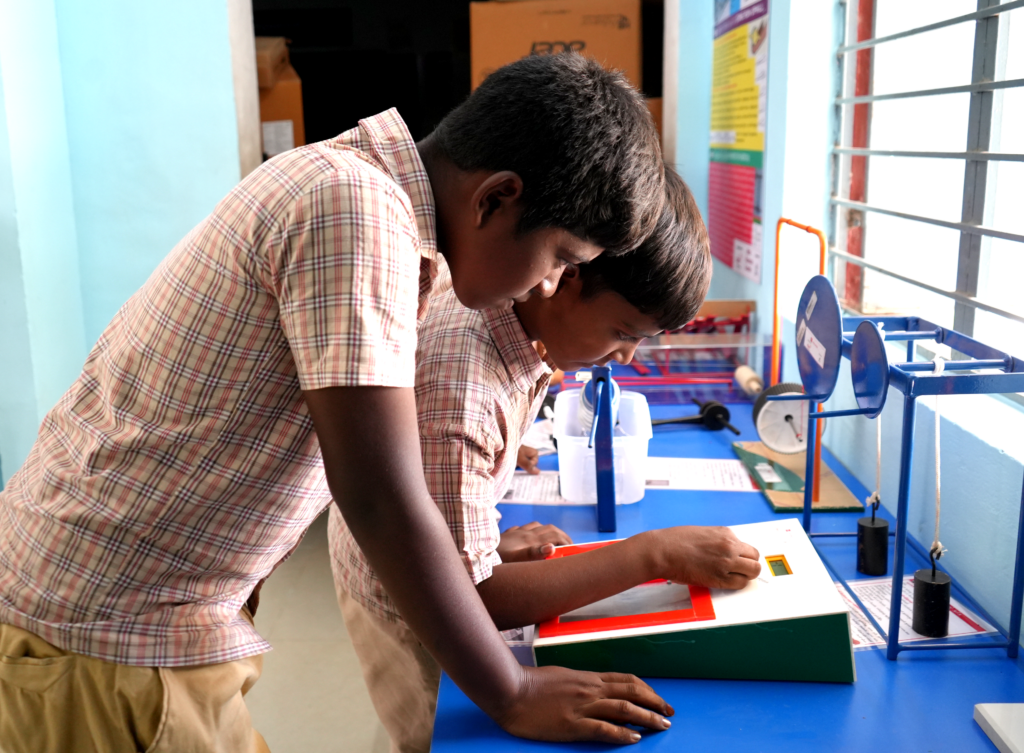
That gap is what the STEM lab set up under our project is meant to close. The models and prototypes we provided give students something to see, touch, and tinker with. “Now, when we teach using these models and setups, students can grasp concepts better. They are also able to express their thoughts more easily and share their ideas with us,” she says.
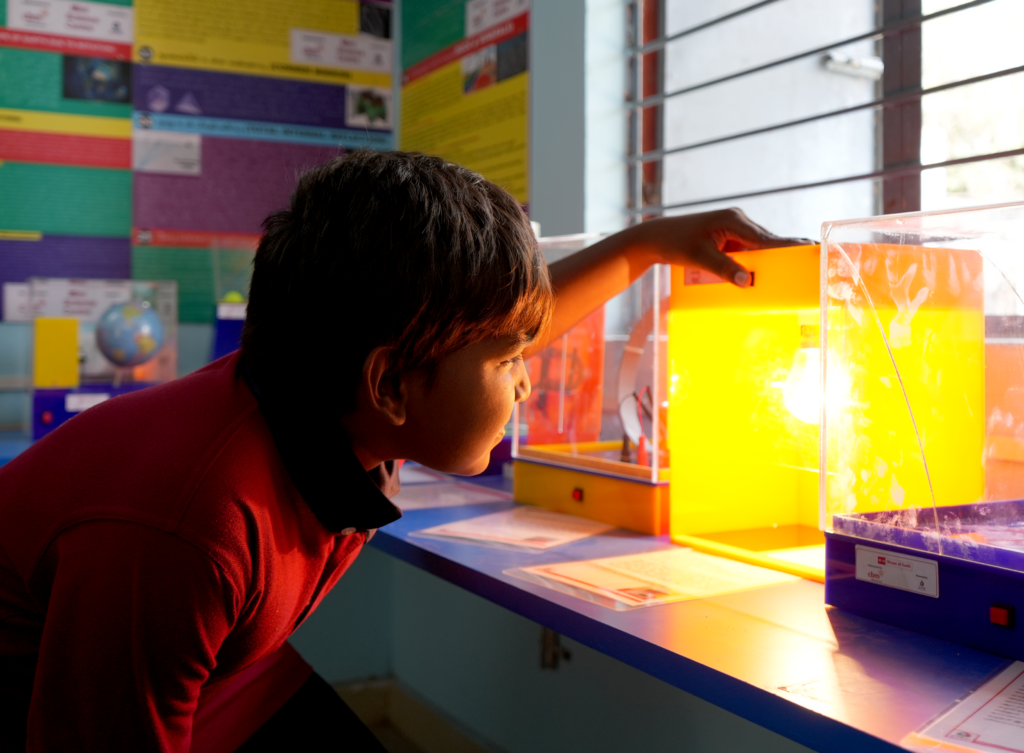
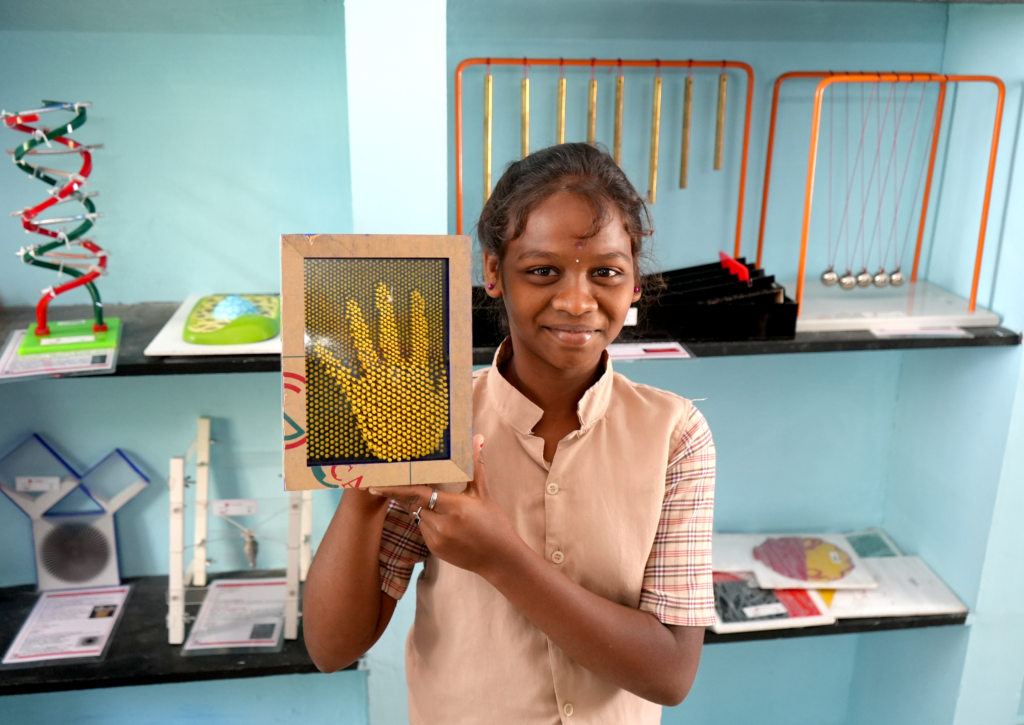
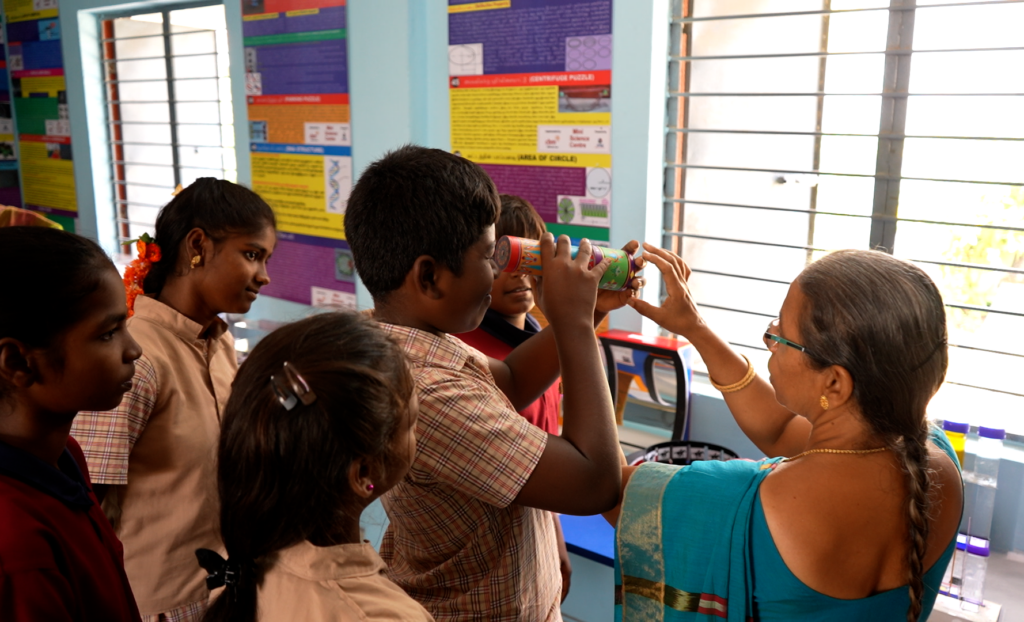
The first sessions have already shown her what she had been hoping for. “When we demonstrate experiments, students become more engaged and curious. They now see science as a practical subject rather than just something theoretical to memorize. By interacting with prototypes and models, they take an interest in learning on their own and explore independently.”
The project also includes a facilitator who will visit the school to demonstrate experiments, a routine Ms. Sathya Priya expects will deepen students’ familiarity with the models and feed their interest in competitions and science exhibitions. A recent science test offered an early bright spot, with students performing well across the board.
The teachers, too, stand to benefit. “This lab has also been useful for teachers,” she says. “It helps them explain concepts more easily.”
For Ms. Sathya Priya, what is most exciting is what still lies ahead. “I am sure that the STEM lab will bring out their creativity, increase their interest in learning science, and encourage children to participate in exhibitions,” she says. “I am confident that in the future, our students will perform even better.”
The STEM lab installation in Ayathur is part of a larger project, supported by one of our CSR donors. The initiative brings together clean energy, improved cooking solutions, STEM education, and safe water access for marginalized communities in Tamil Nadu, Madhya Pradesh, and Karnataka.