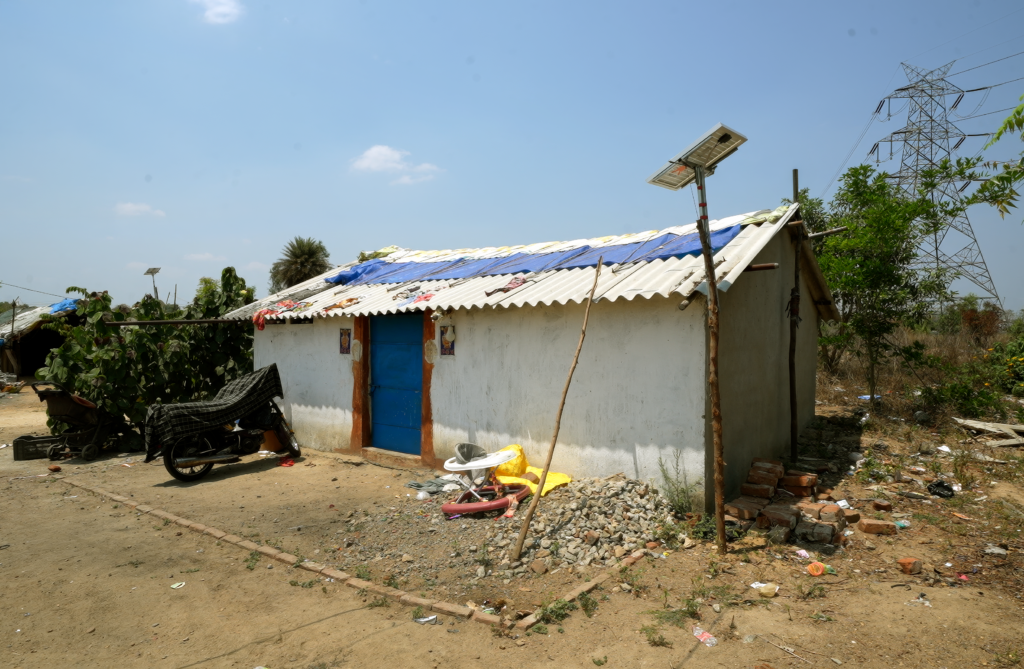
A narrow mud path leaves the main road a few kilometers outside Arakkonam town and winds through parched soil and thinning vegetation to the Narikuravar colony at Thanigapolur. Trains rumble past on tracks that curve around the settlement like a half-drawn boundary. A cluster of thatched houses, topped with tarpaulin sheets, are scattered across roughly 50 cents of land.
The Narikuravar are among Tamil Nadu’s most marginalized indigenous communities. Historically nomadic, long pushed to the edges of villages and economies they were never quite let into. Most families here have no documents for the homes they live in. Schools are far, water comes from a distance, healthcare further still. And, until a few weeks ago, the day ended at sunset.
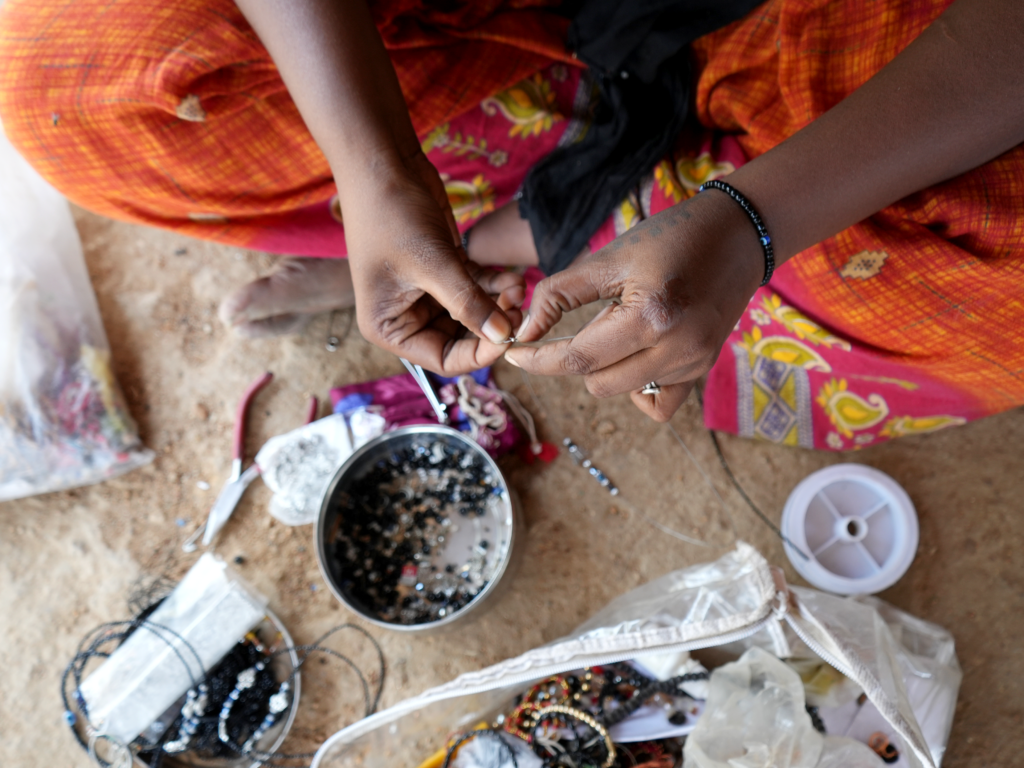
Bhoopathi has lived in the colony for thirty-five years; Pushpa for almost as long; Gowri too has raised her family here. Like most women in the community, they earn a living by stringing beads into anklets and small ornaments. It’s fine, slow work that depends on good light and a steady hand. “We spend the entire day stringing beads and making anklets,” Bhoopathi says. “This is our main source of income.” The women travel by train to Chennai to buy pearls, thread, and needles and sell their finished handicrafts to passengers on the way back. The men leave for daily wage work or head into the forest to hunt. A good day brings in 300 to 500 rupees for a household. There is little else to fall back on. “Beadwork is the only work we know,” Pushpa says.
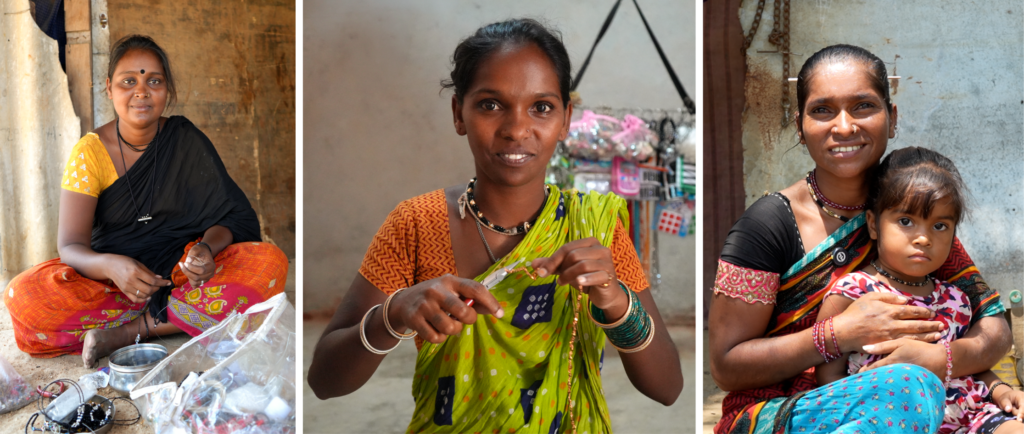
Most homes in the colony have an electricity connection of sorts. It’s usually a single dim bulb that gives little light. After sundown and during power cuts, the kerosene lamp takes over. Threading a needle by its flame is straining work. “We had to bend closer to the lamp and strain our eyes,” Pushpa says. “My back would ache a lot.” Beadwork slowed to a halt. Cooking became fumbling. And the night brought another fear: snakes, scorpions, and other insects.
The houses are not always solid; there are gaps in the walls and holes, and creatures find their way in. “It happened that snakes came into our home, but we couldn’t see anything in the dim light,” Gowri says. “We have to stay alert through the night,” Bhoopathi adds. For Pushpa, the worst part is the children. “If a snake or scorpion bites us adults, we somehow manage. But if it’s the children, what can we do?”
About three months ago, our team visited the colony as part of our Harit Jeevan project. They went from house to house and made a list of families. They returned for a second visit to understand what each household already had, and on a third visit, they installed solar lighting systems in over 90 homes, along with two solar-powered streetlights in the settlement. For families like Bhoopathi’s, Pushpa’s, and Gowri’s, the household solar system has changed it all.
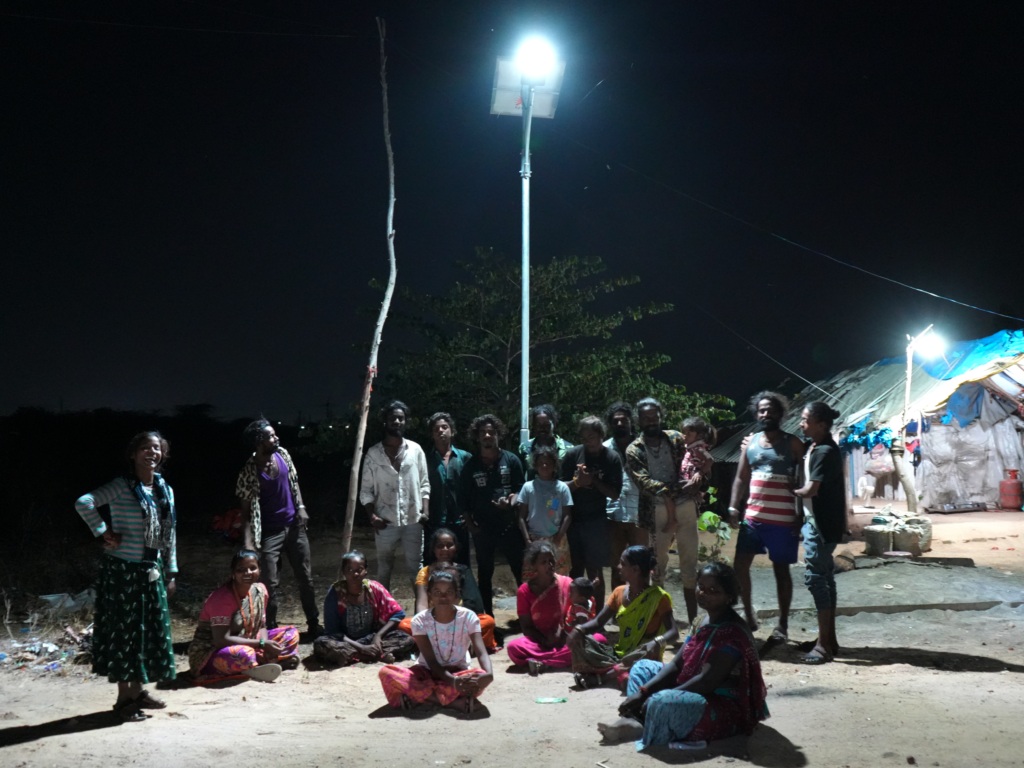
“Now life has become much more convenient,” Bhoopathi says. “Children now sleep peacefully and don’t wake up at night.” Cooking, storing water, household chores, all of it became easier.
Beadwork resumed in earnest. And something new has begun in the evenings: the women gather outside, under the streetlight, and string beads together. What was once a solitary task done by lamplight, has become something shared.
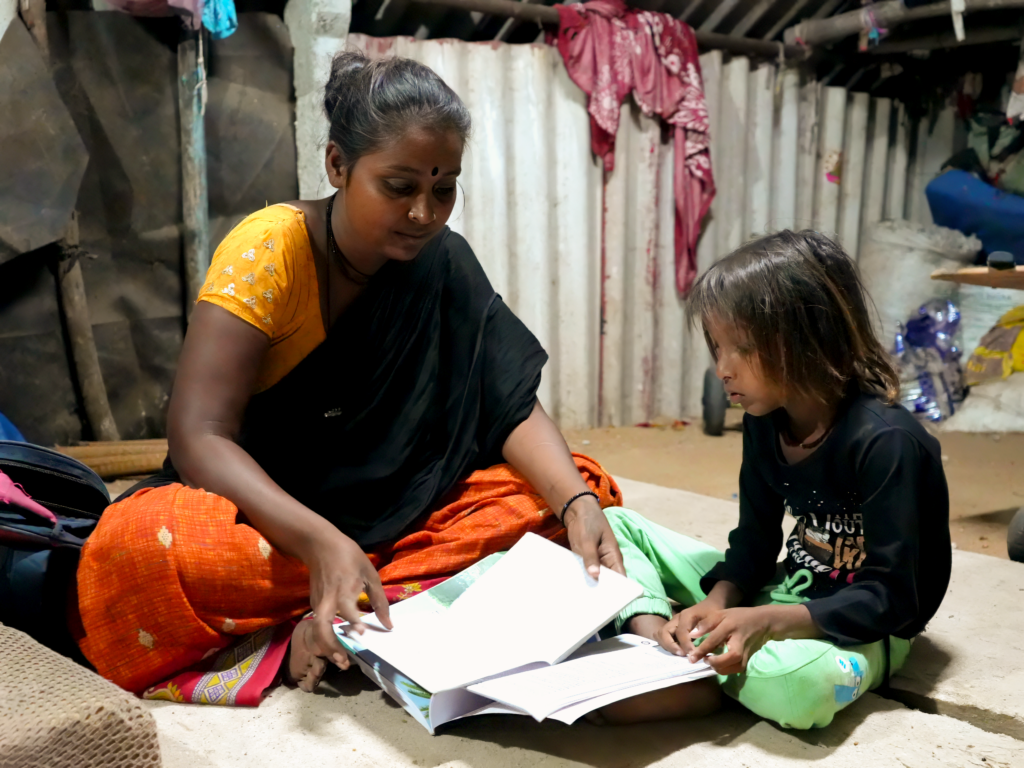
The night itself feels different. Snakes and scorpions still pass through the colony, but they no longer move unseen. “We feel a little more secure now,” Pushpa says.
The Narikuravar community people speak of their village with careful warmth, of neighbors who help, of living peacefully, of causing no one any trouble. It is the language of a group that has, over generations, learned to take up little space. And yet, in the evenings now, they take up a little more. A needle threaded. A child sleeping through the night. Women sitting outside together under the streetlight. For a community long accustomed to making itself small, these are not small things.
The day no longer ends at sunset.
The solar lighting solutions installed in Thanigapolur are part of a larger project, supported by one of our CSR donors. The initiative brings together clean energy, improved cooking solutions, STEM education, and safe water access for marginalized communities in Tamil Nadu, Madhya Pradesh, and Karnataka.